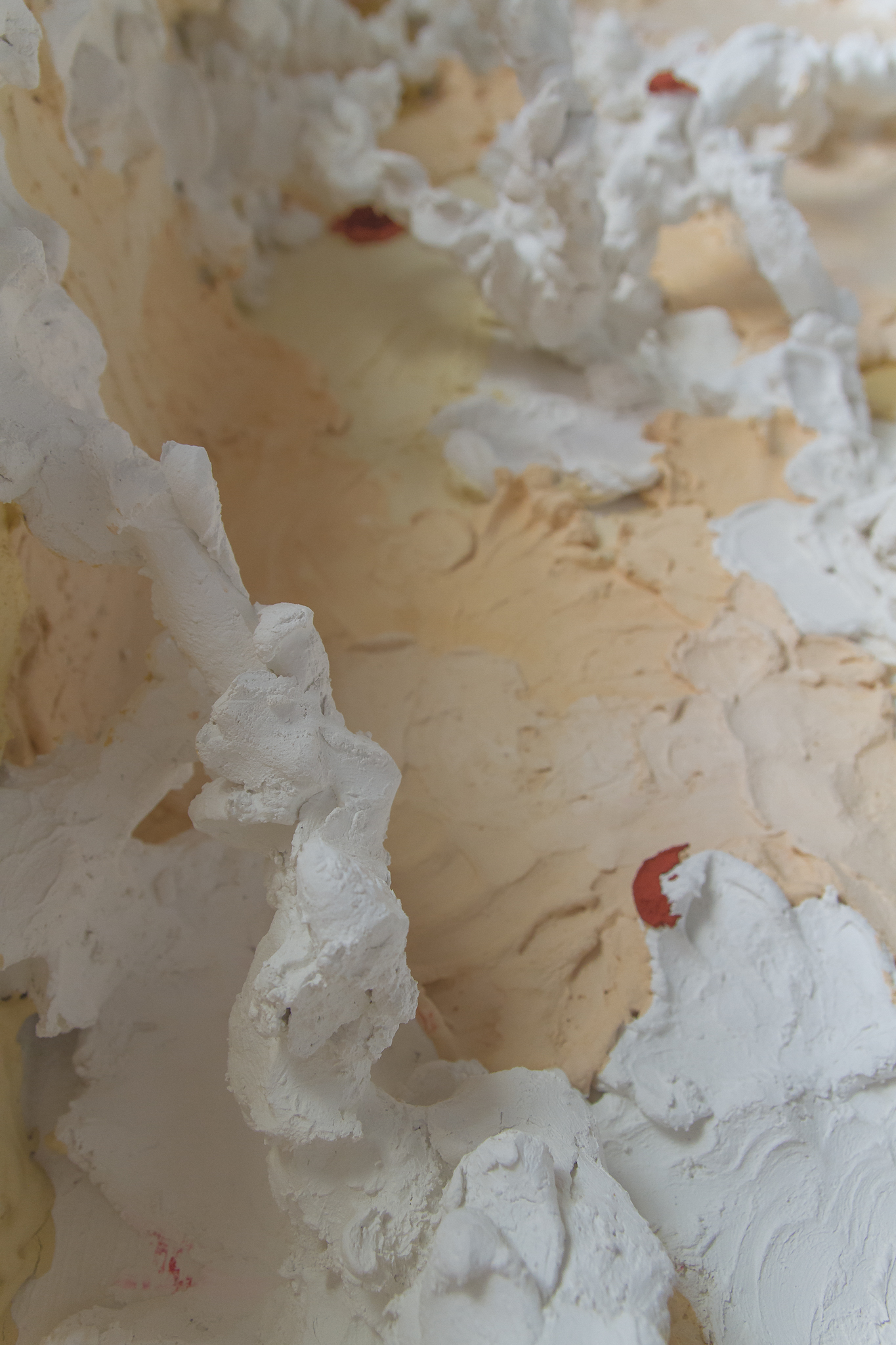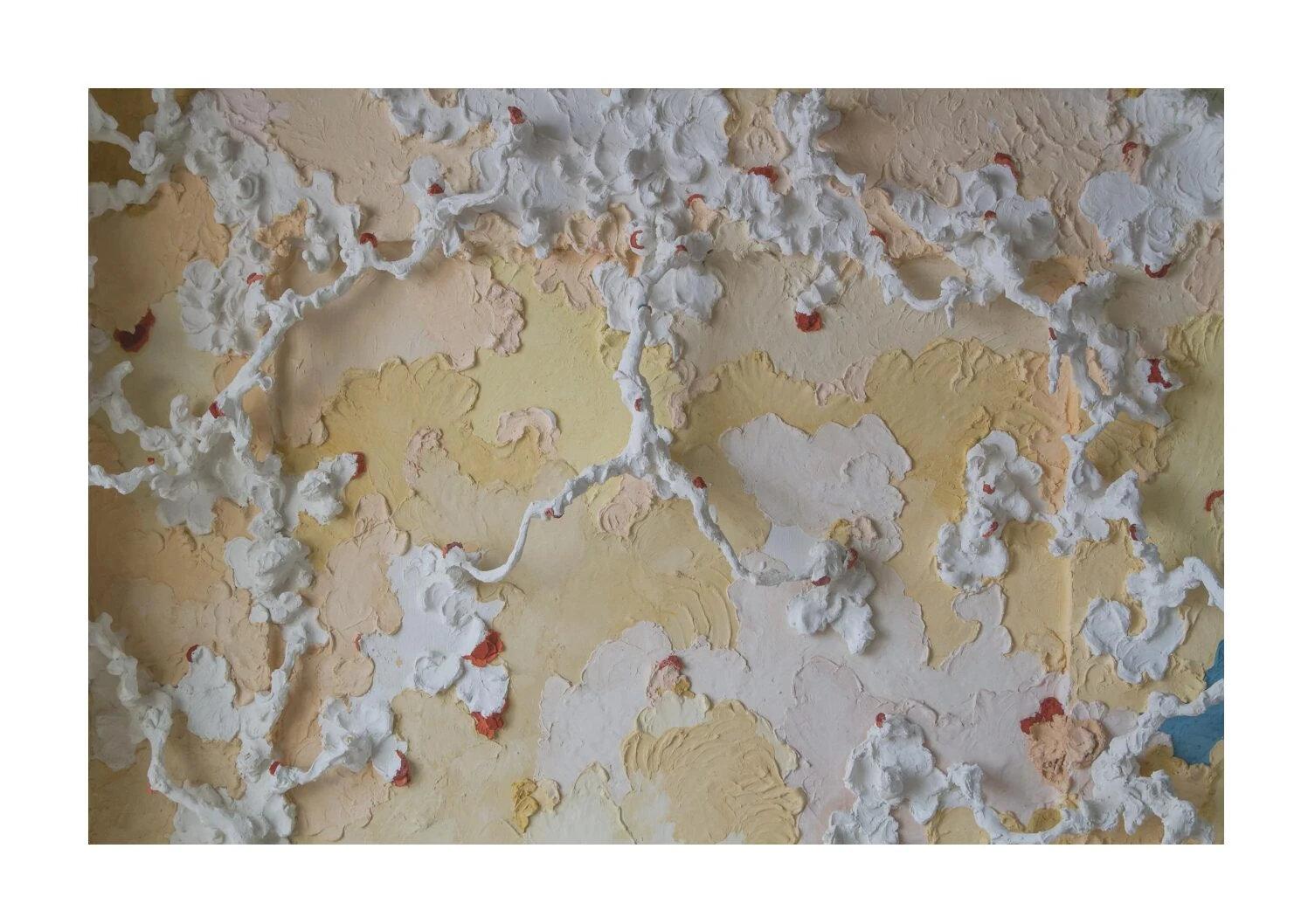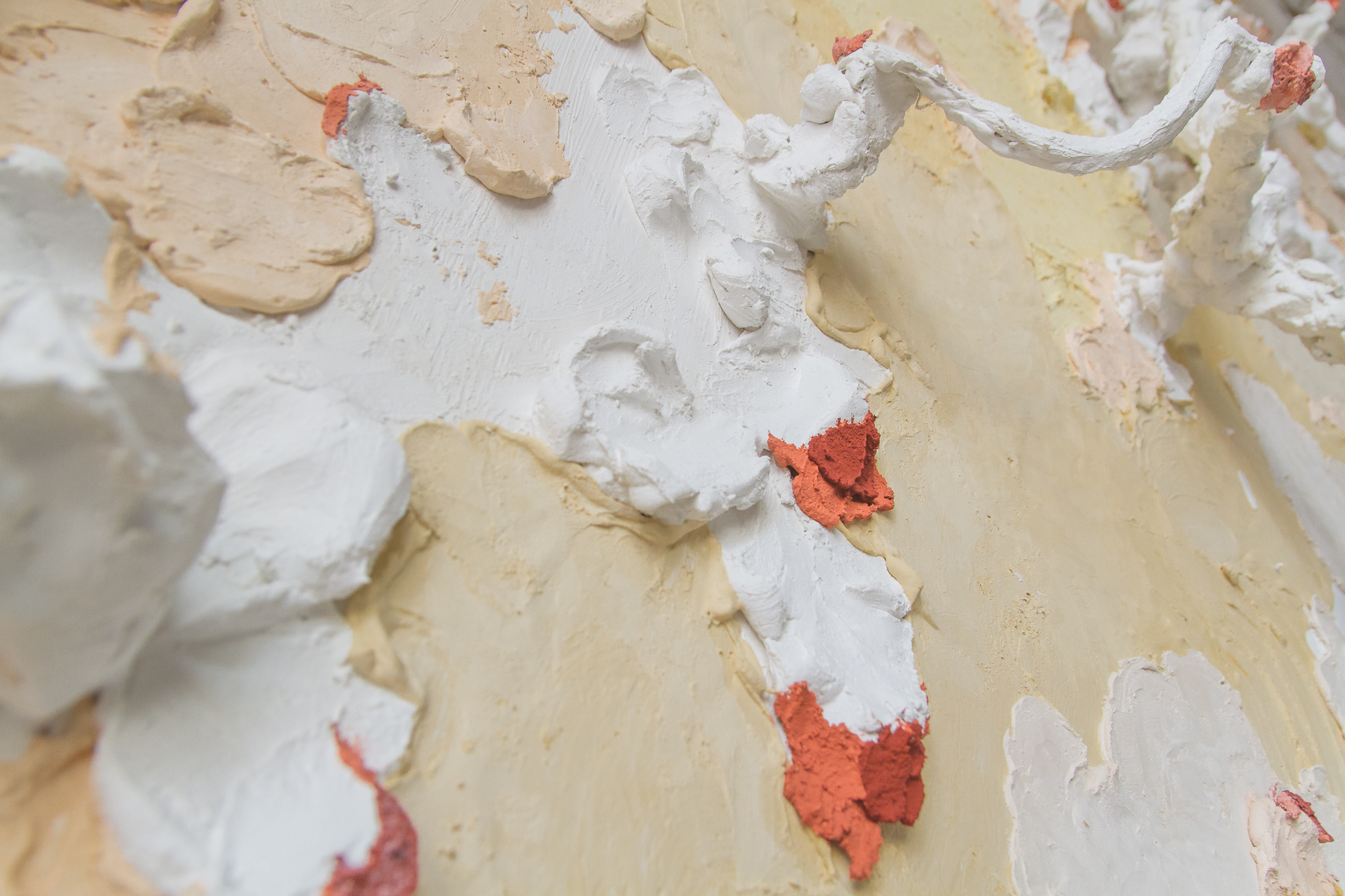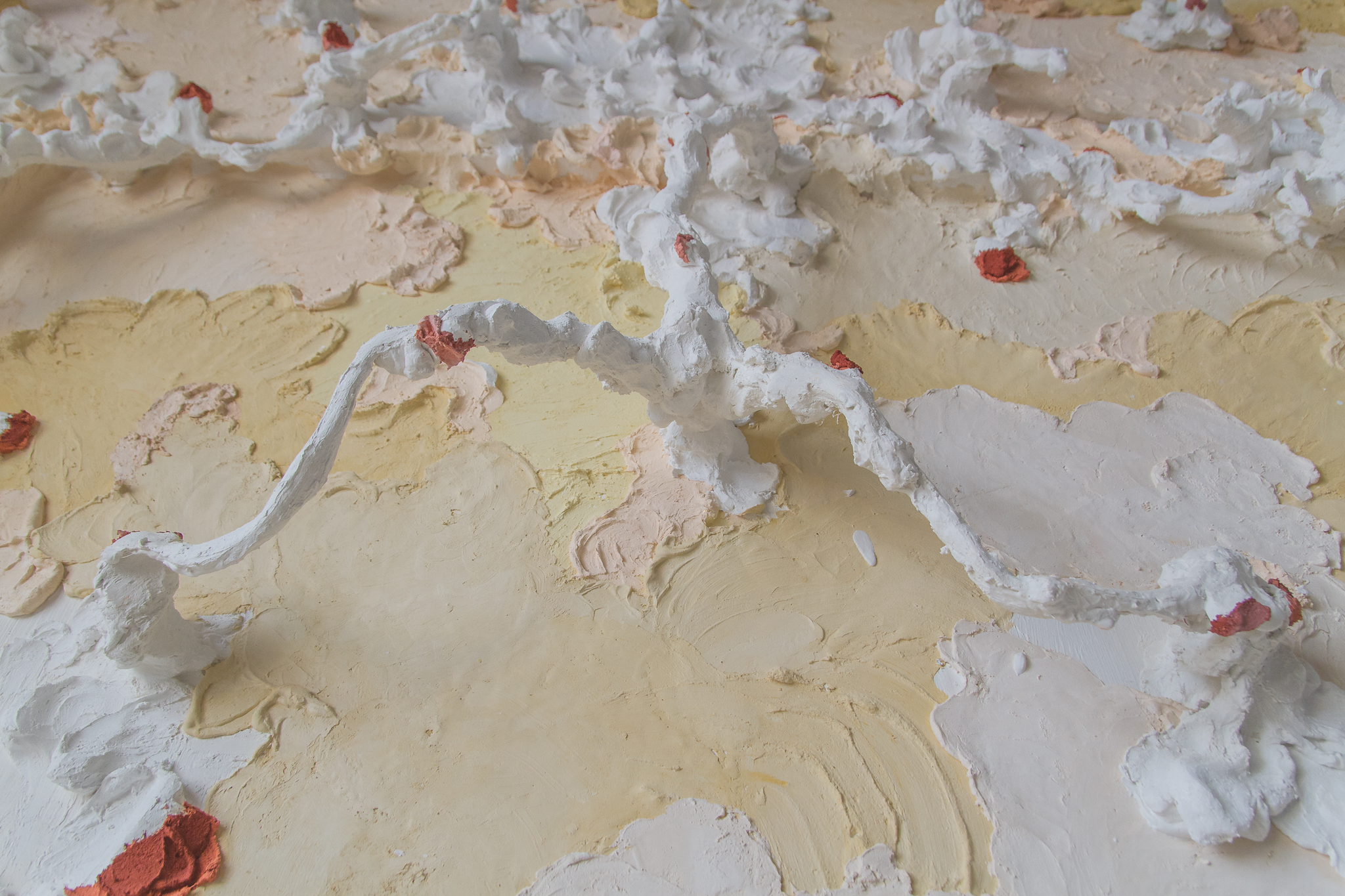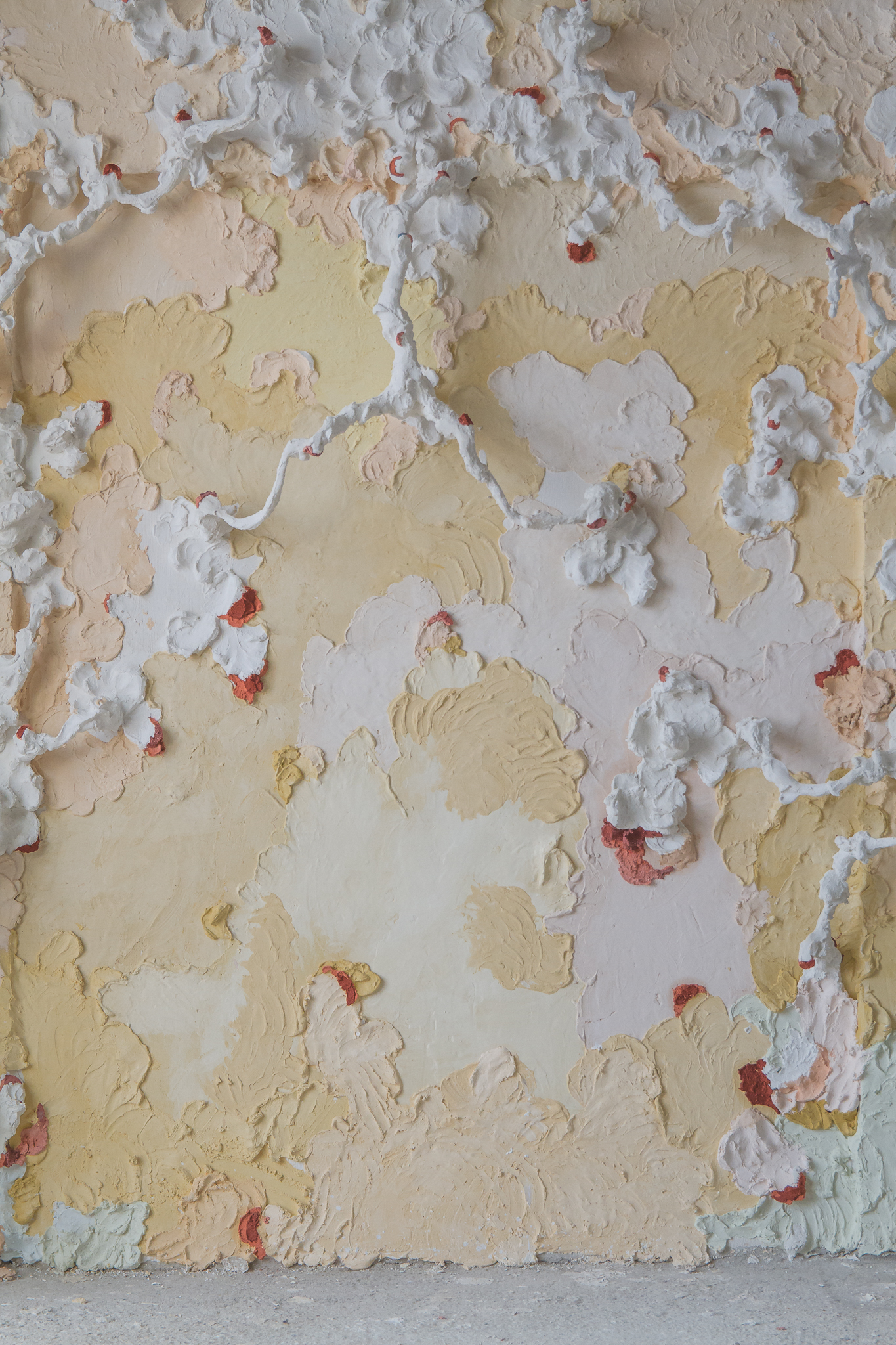
There is something subversive in the way Giacomo Serpotta elevates a humble material such as stucco (plaster, lime, and marble dust) to the level of the Baroque’s formal aspirations in his Palermo Oratories.
This shift in material hierarchy − from marble, durable and glorious, to stucco, a far less noble substance − has long been an obsession in my artistic practice. For the mural work Italiano in Algeri, I imagined that this compositional exuberance might have more to do with vegetation than with architecture. The result was an intricate network of creepers emerging from a concrete-based painting and disappearing back into it.
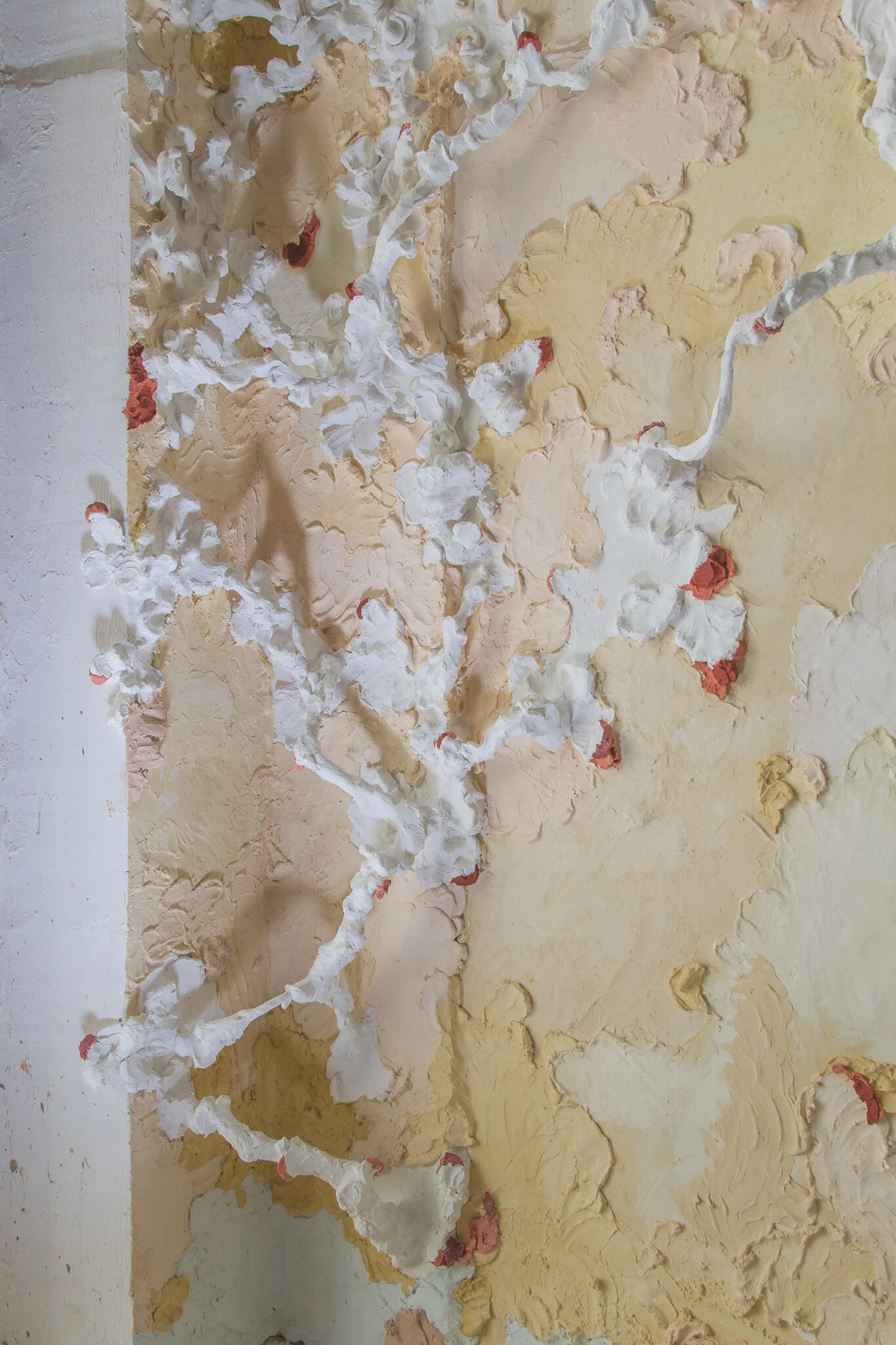
Another of my obsessions is the idea that the word rovina (“ruin”) might not derive from ruere (“to collapse”), but rather from rovo (“bramble”), the wild plant of the countryside. However improbable this etymology may be, it has offered me a way to conceive of the relationship between ruined architectures and the encroachment of nature, as if ruins were destined to be reclaimed by brambles and climbing plants.
I asked myself: “What if vegetal forms were a means of architectural creation? What if they held the possibility of a new monumentality?”