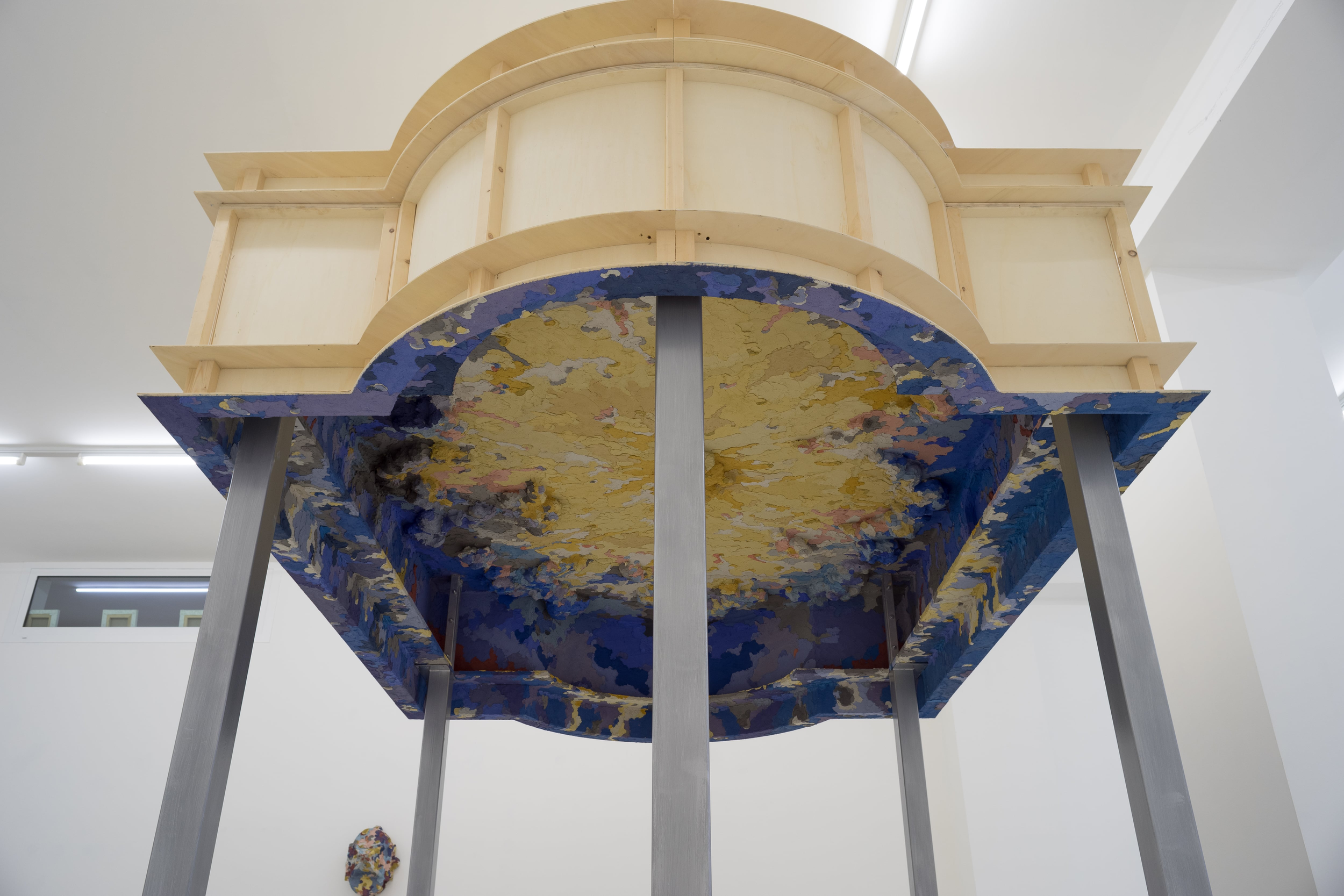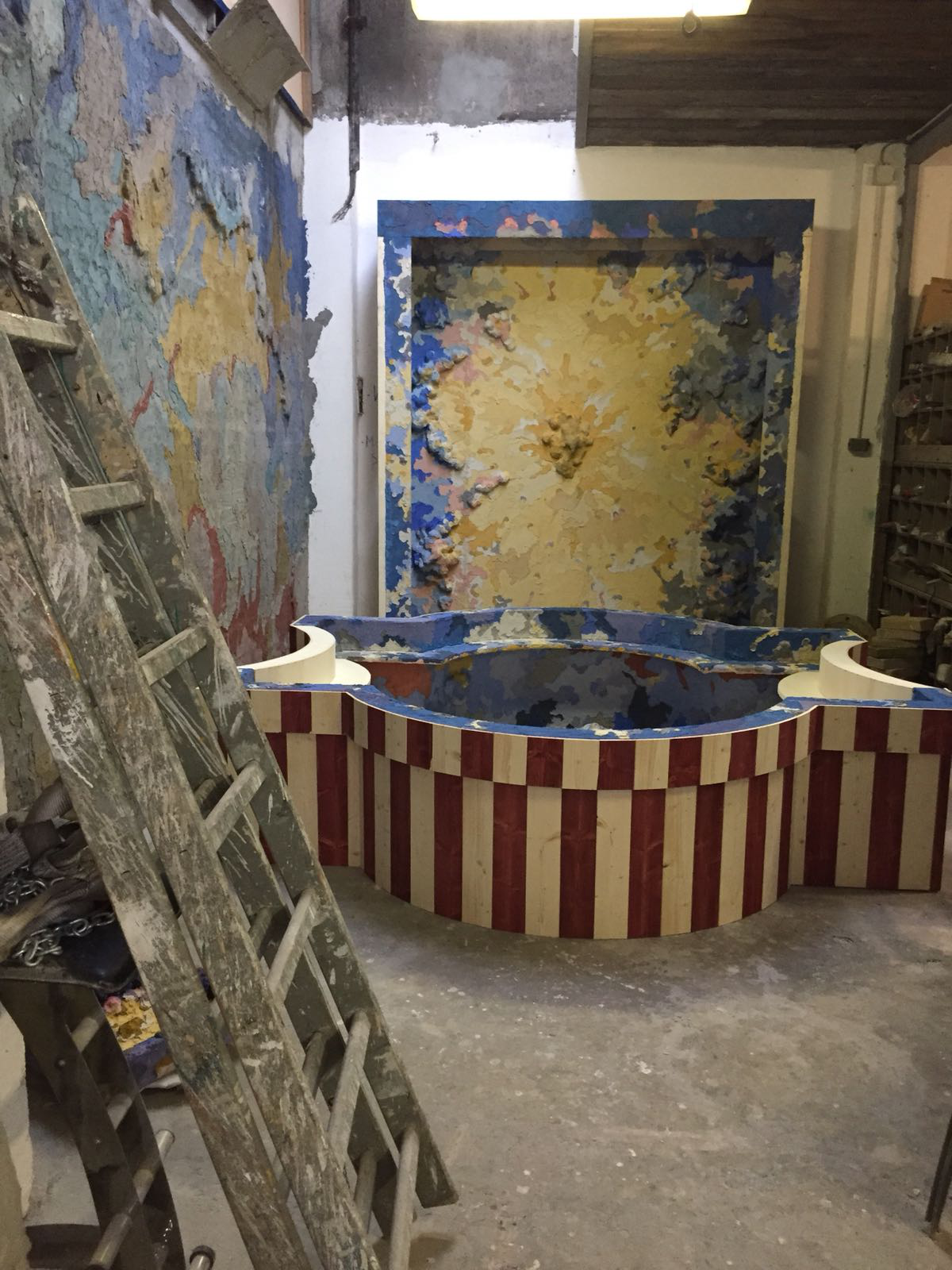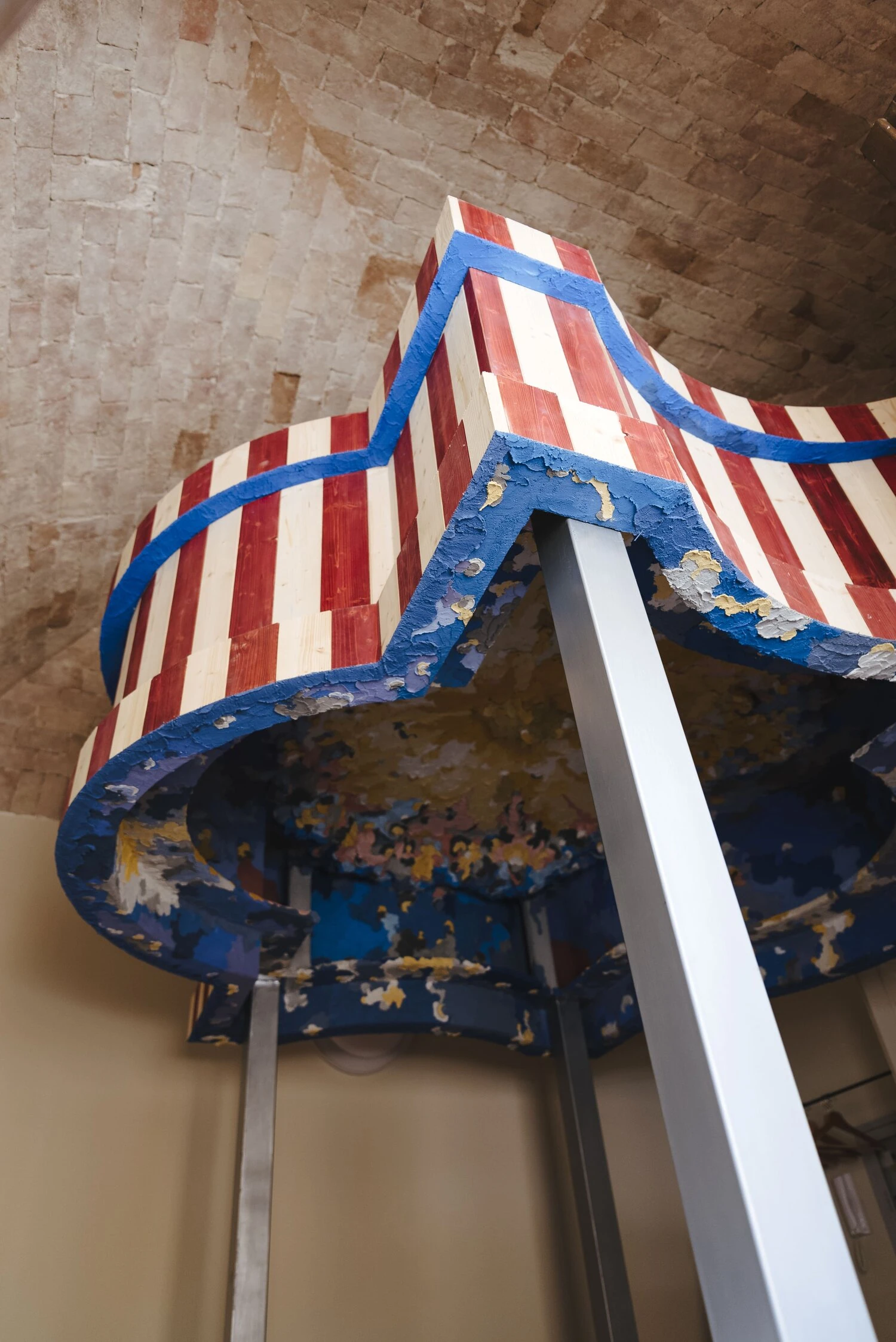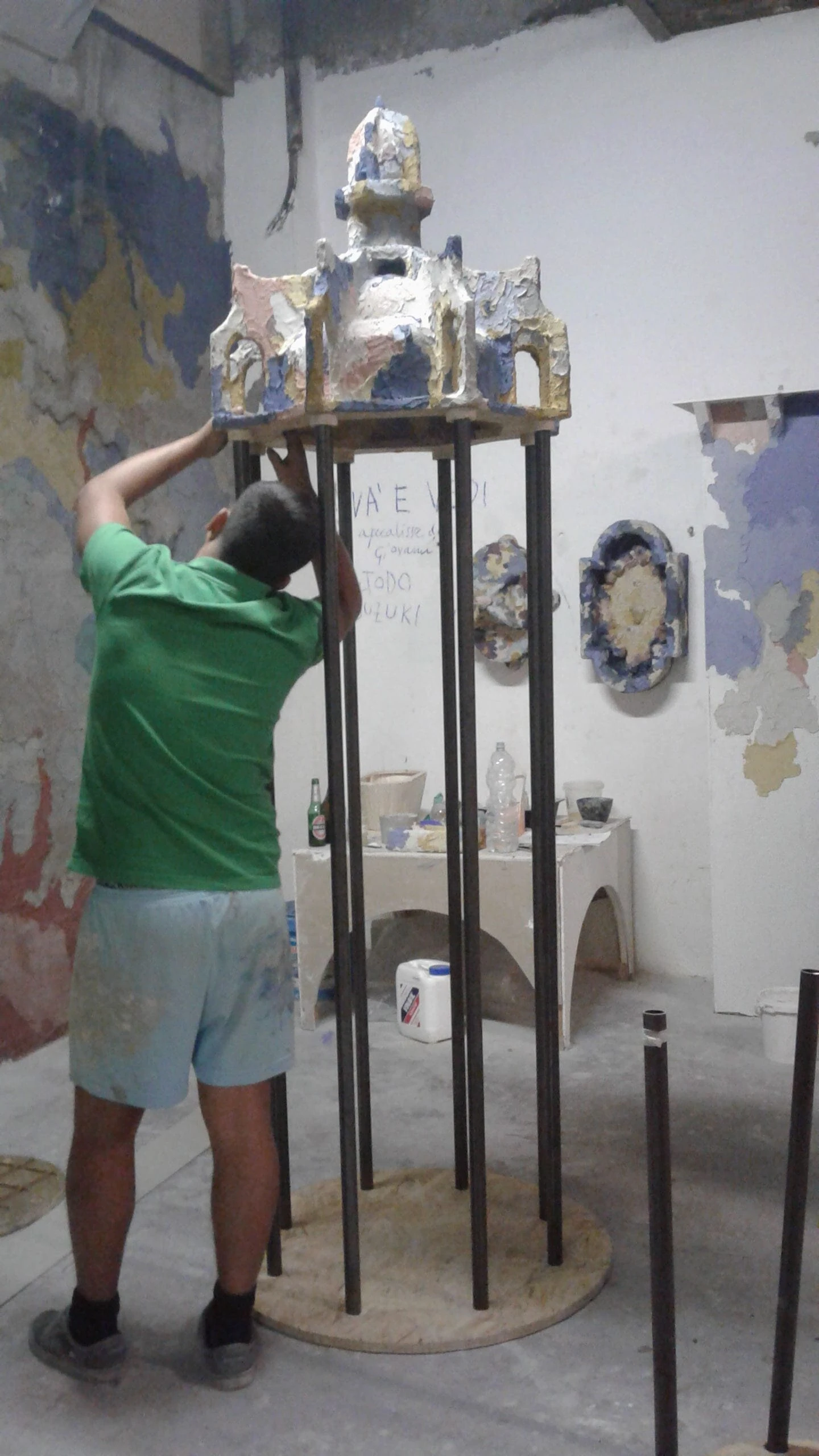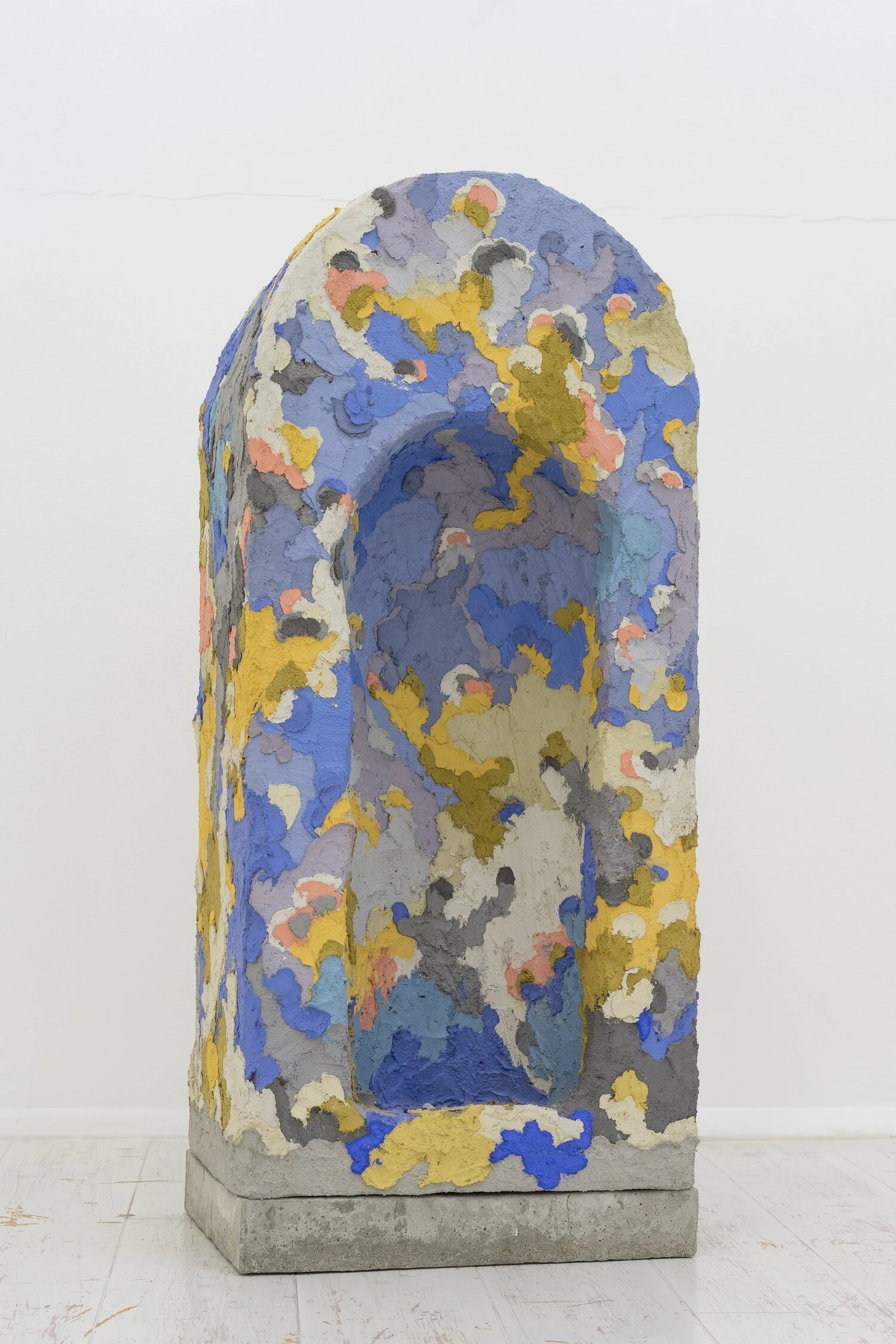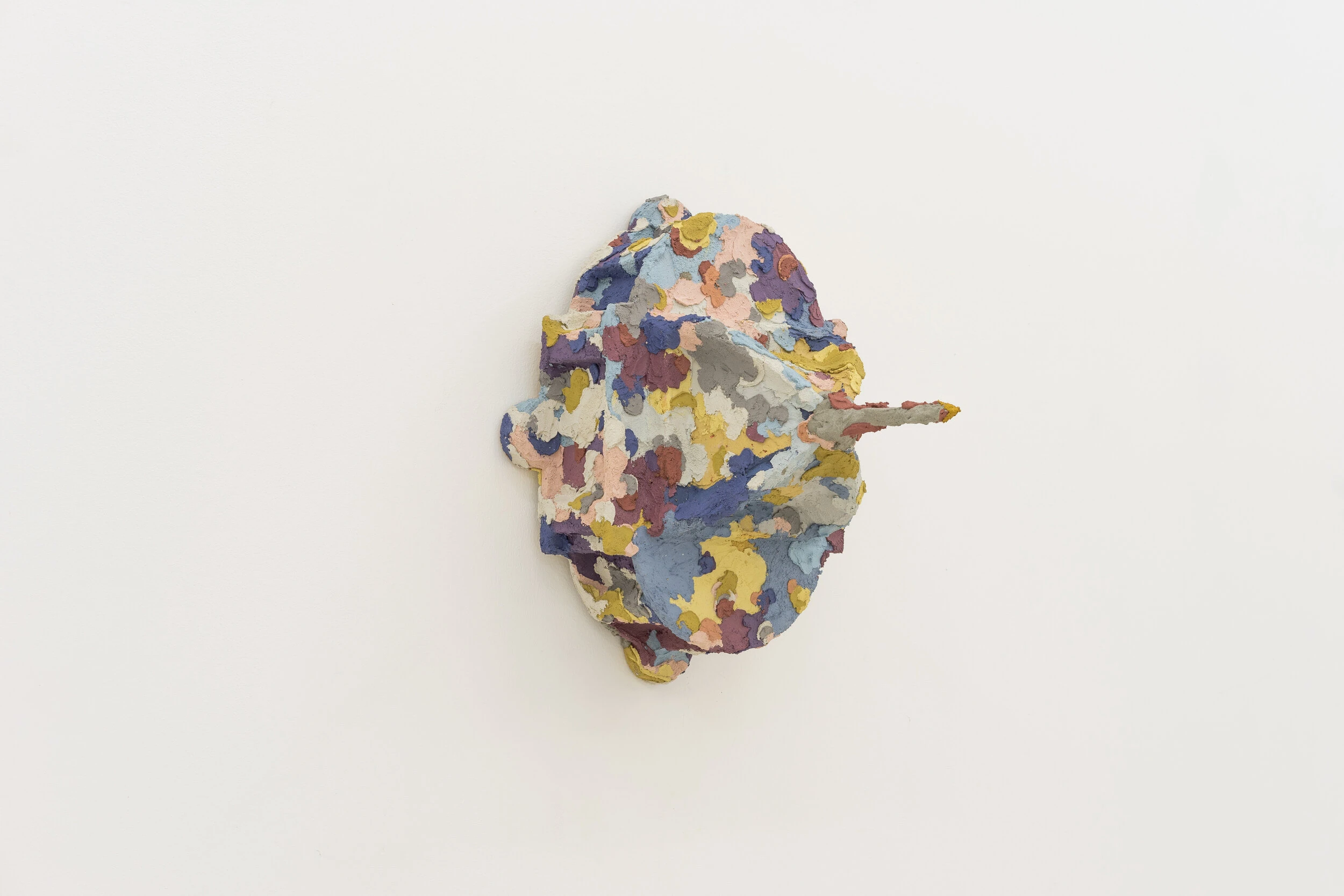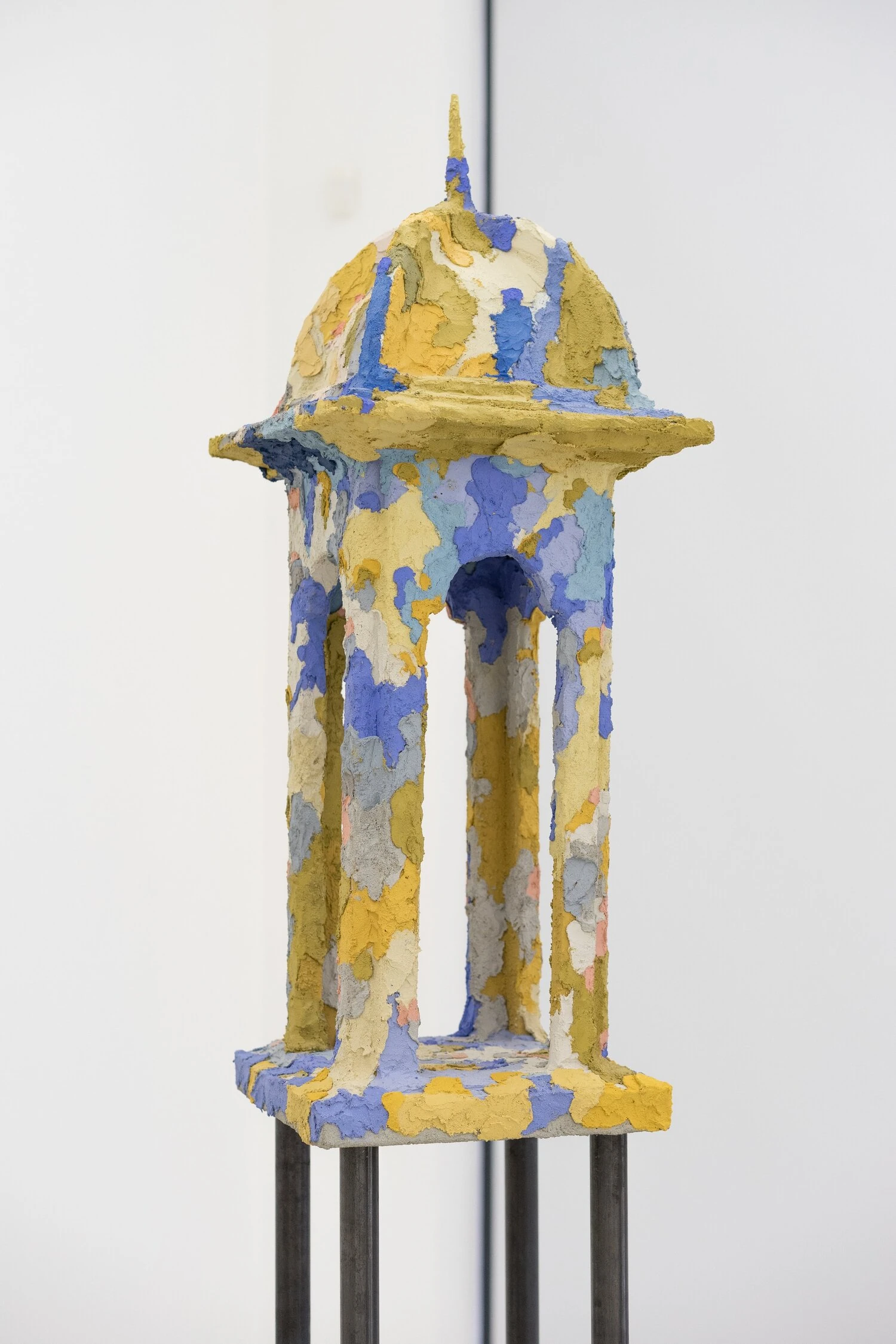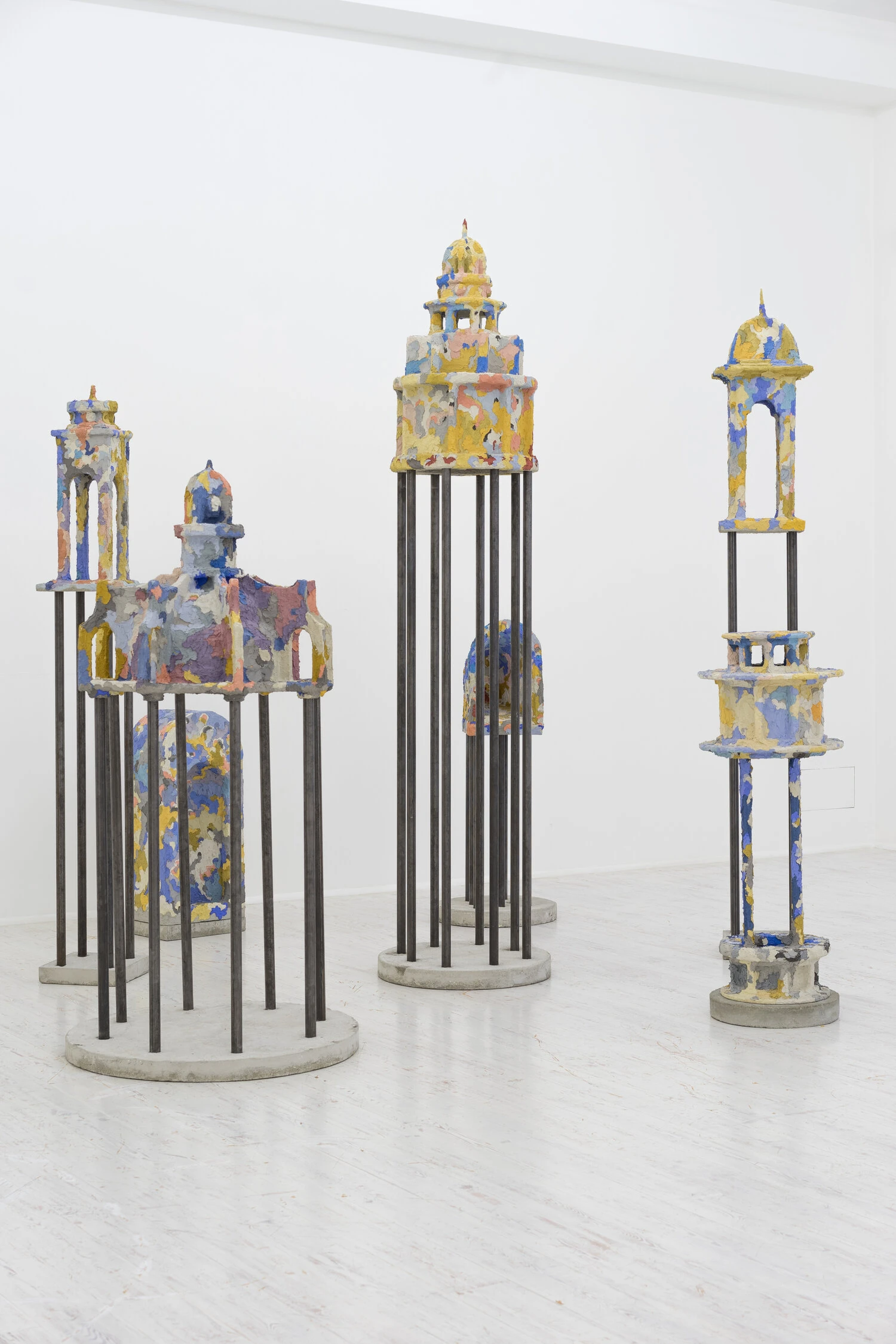
“Patrono” derives from pater: in ancient Rome, it referred to an authoritative and protective figure − a legislator, an advocate. Catholicism transformed the term into the patron saint who protects cities and professions. I like to think that Patroni should ultimately remain an example, a model that a community can still look to: a presence that does not fade with time, but is entrusted to architectural form.
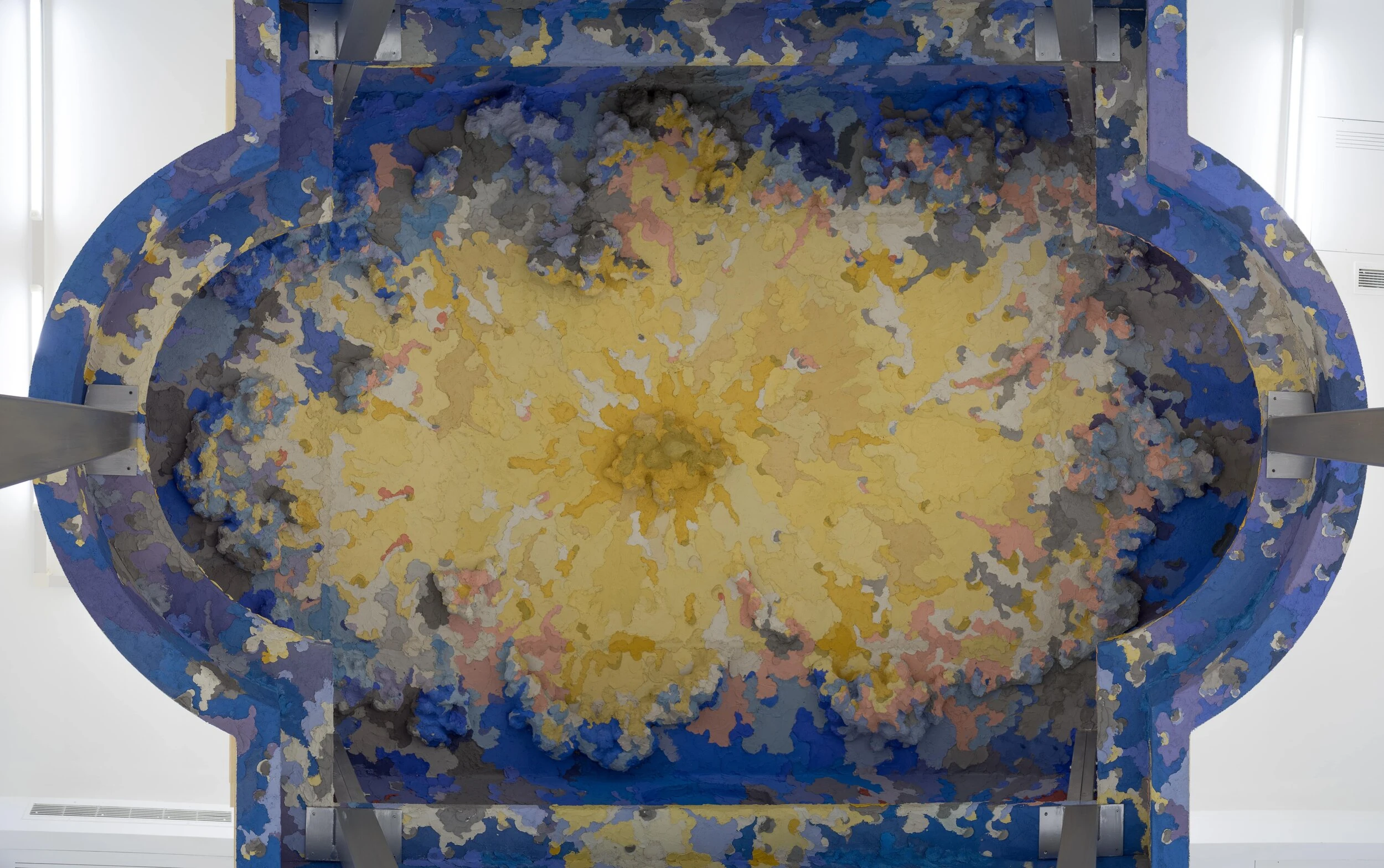
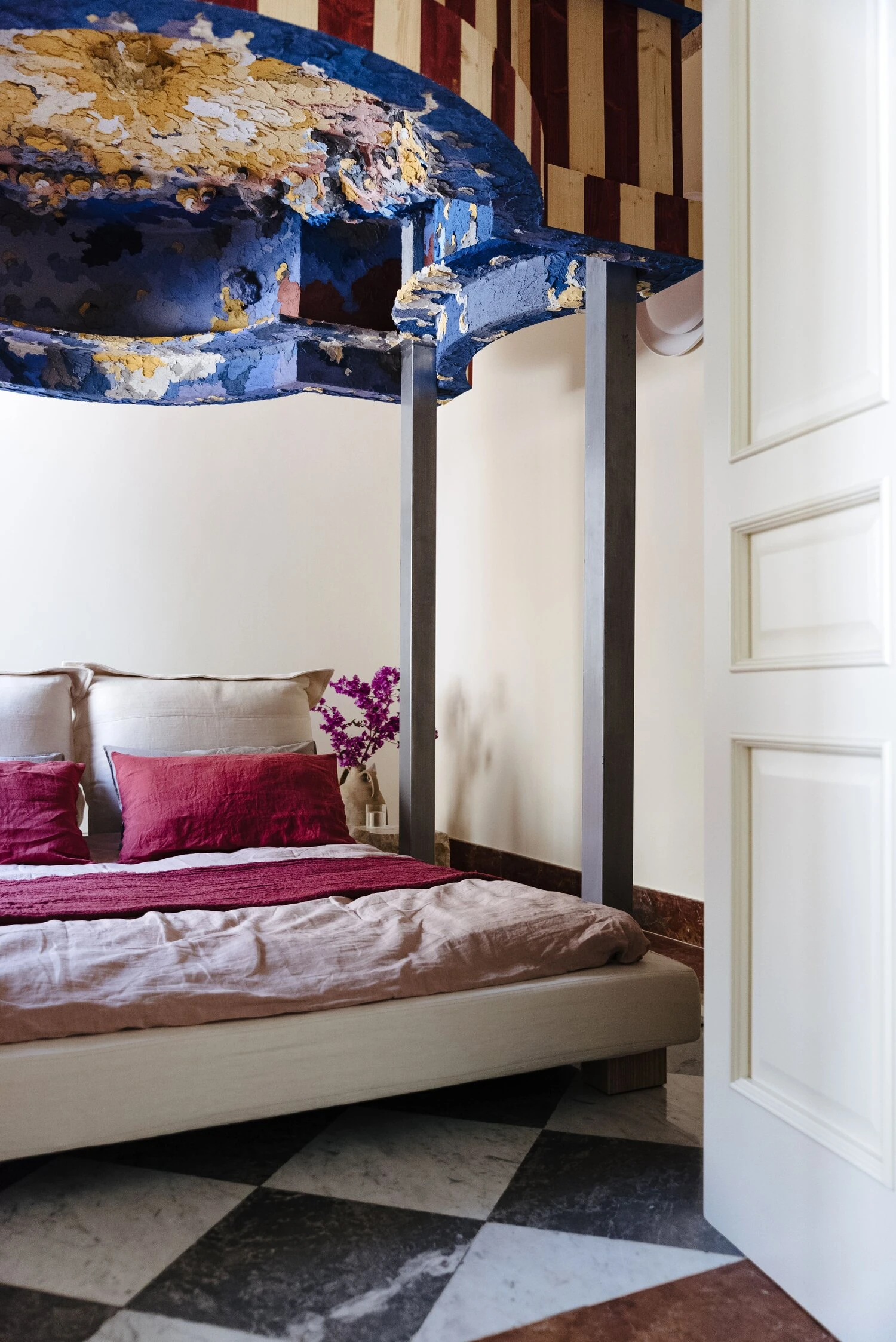
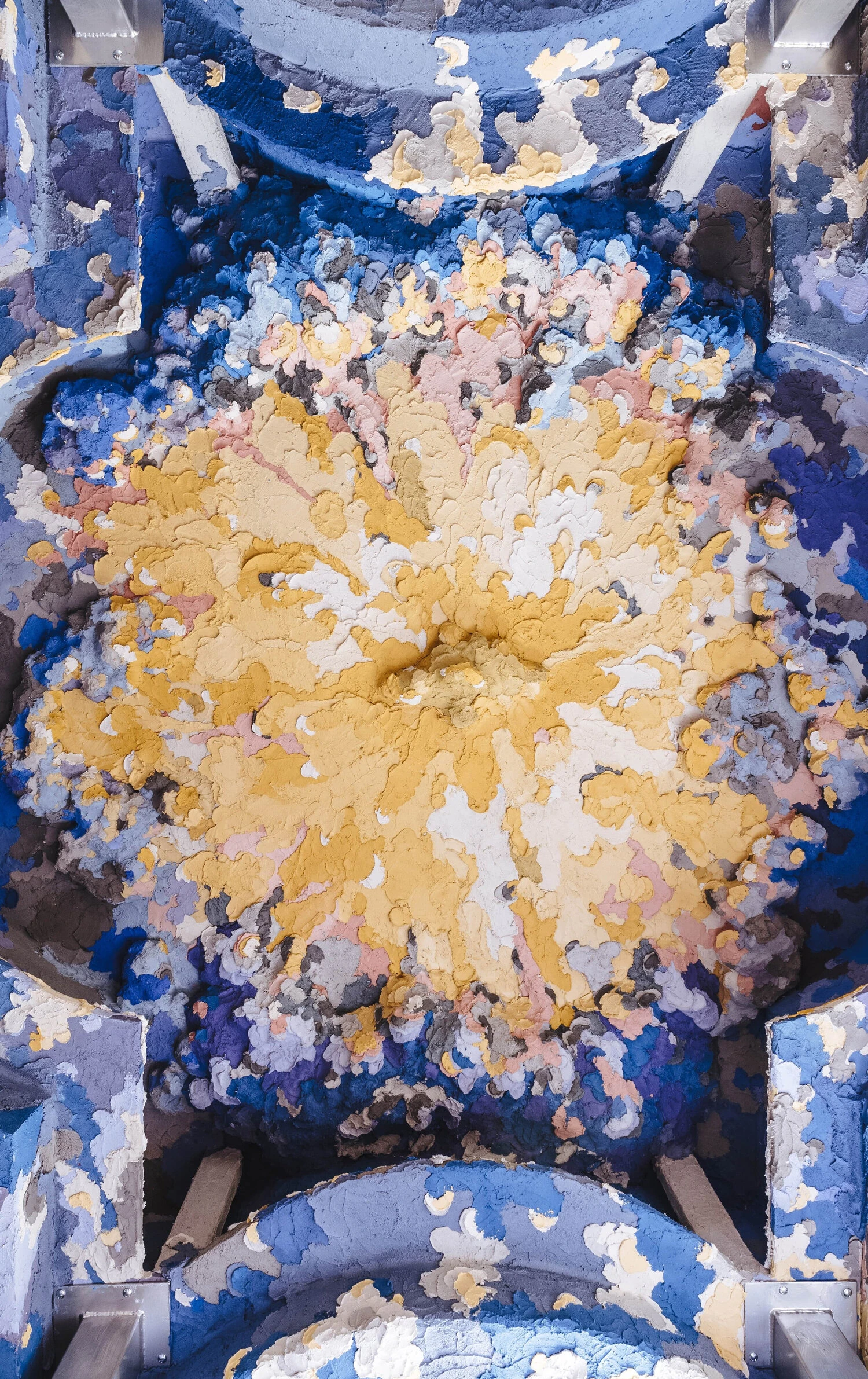
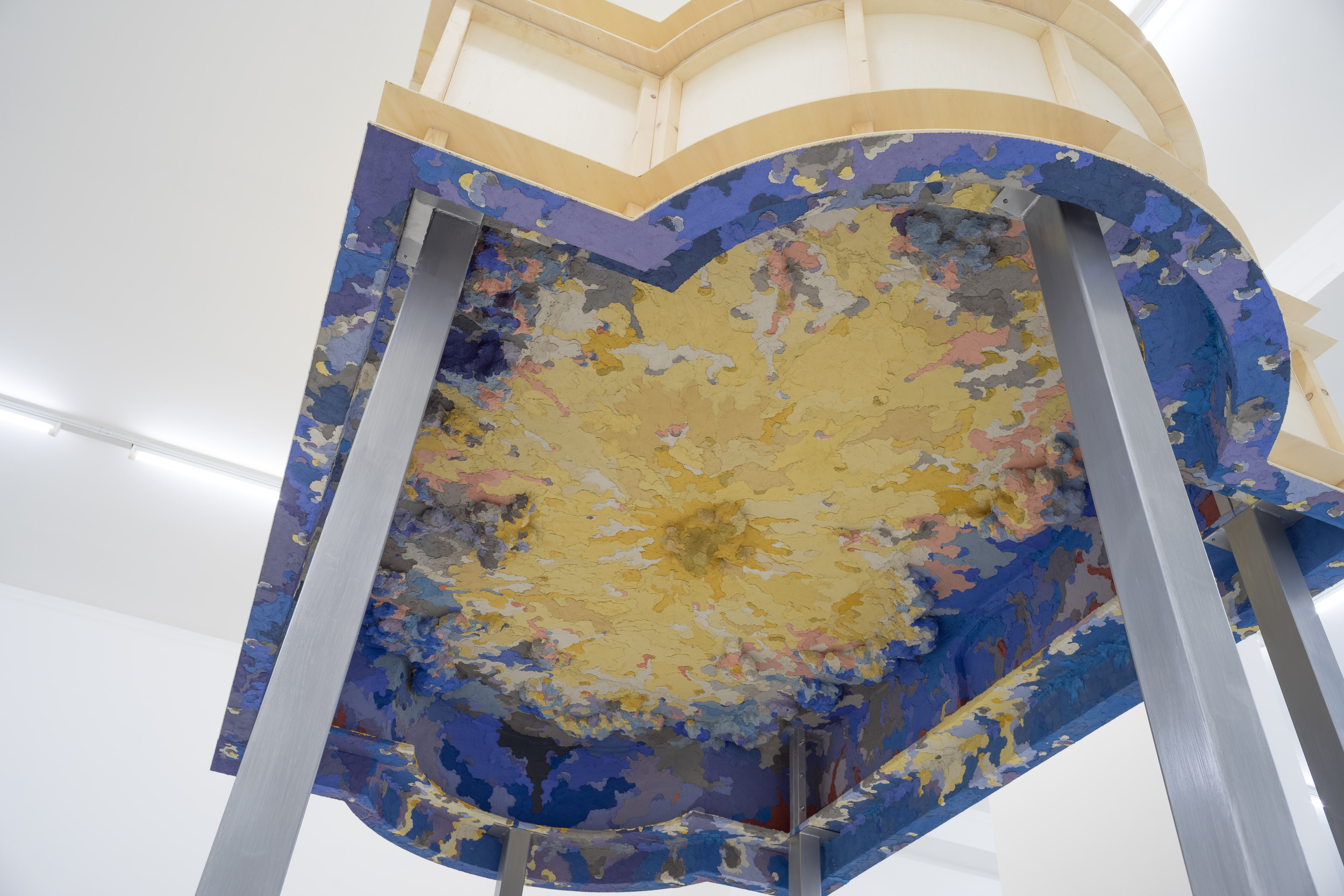
In my work, figuration dissolves into a dense weave of brushstrokes in coloured mortars: a polychrome arriccio that veils and softens the contours. This is not an iconoclastic gesture, but something closer to the action of time itself, which slowly erodes and blurs things − a time that I attempt to construct through painting. What remains, in the end, is the permanence of a structure.
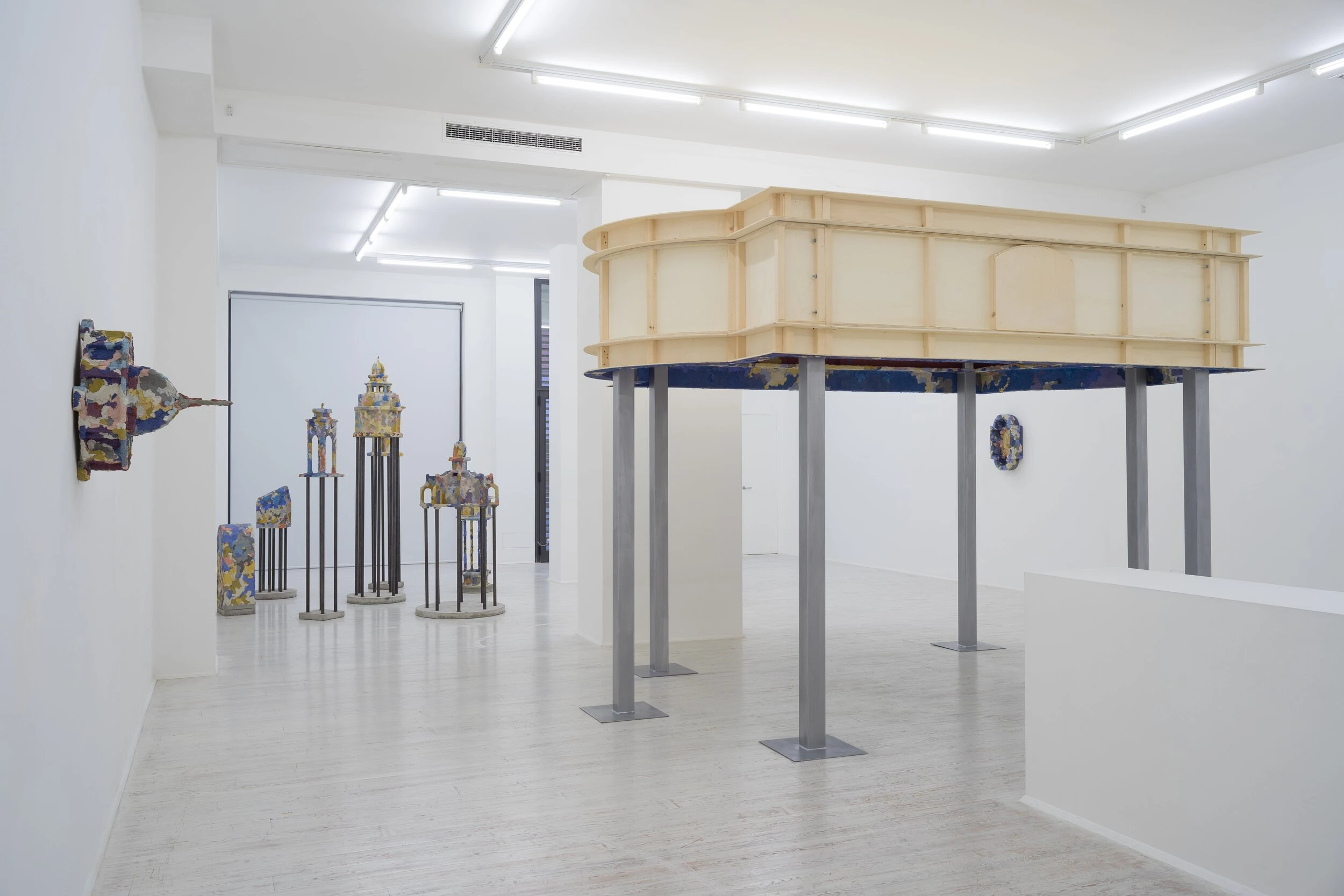
Patroni consists of ten small architectural models, a compendium of little temples and tabernacles that, remaining faithful to their role as models, become sculptures: sculptures that invite the gaze to lower itself, almost in an act of contemplation. What I seek is precisely this invitation: not an equal relationship, but a small, silent call.