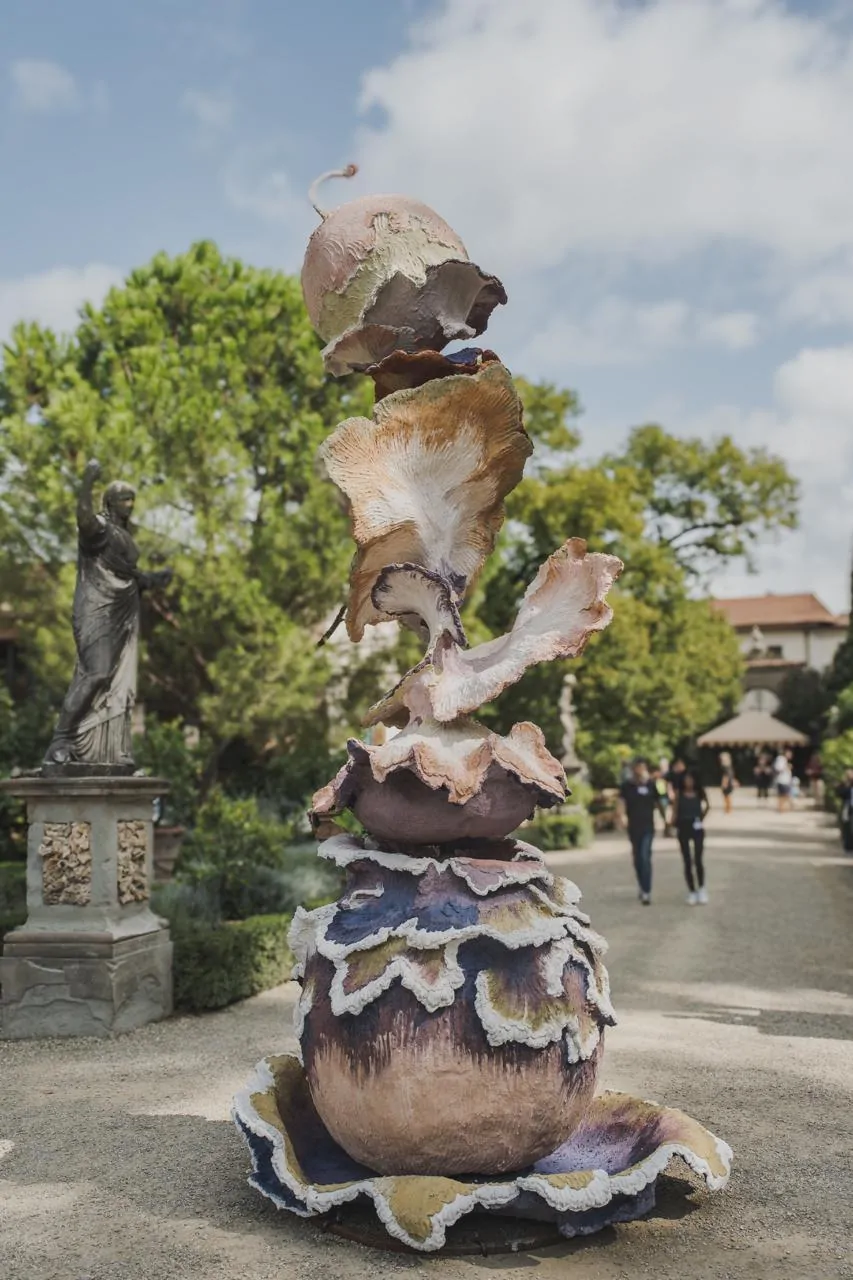
The invention of gelato has been attributed to Bernardo Buontalenti, a Florentine architect, stage designer and, apparently, sorbet maker. Delizia stems from precisely this tradition, in which art is eaten, melts away, and is served at the table amid colonial sugar and beaten eggs. It is a work in pigmented concrete conceived for the garden of Palazzo Corsini, where everything looks made of sugar but weighs as heavy as power.
The work draws on the trionfi da tavola, those ephemeral architectures of sugar and eggs that blended sculpture, painting, architecture and haute pâtisserie: a dessert baroque designed to celebrate, with great theatricality, religious and political authority. Sugar, the sweet residue of an extractivist logic, imported from the Americas, was the principal material of Catholic propaganda: white, devout and expensive. Another fundamental ingredient, the egg, also takes part in this game of transformations. The base of tempera painting before the advent of oil, in the trionfi, it does not merely bind the paint but swells, gains volume and becomes ornamental architecture.
Thus, Delizia takes concrete (grey, muscular, postwar, laden with virility) and treats it like meringue: light, decorative, a little ridiculous, at last. Because sugar, as we know, builds empires, but also brings them down, with grace.