At first glance, as may have happened to some of the earliest and less attentive Venetian merchants, they appear to be red berries. They are, instead, precious insects clustered together: cochineal insects, from which the crimson pigment is extracted − the colour of the Venetian gonfalon.
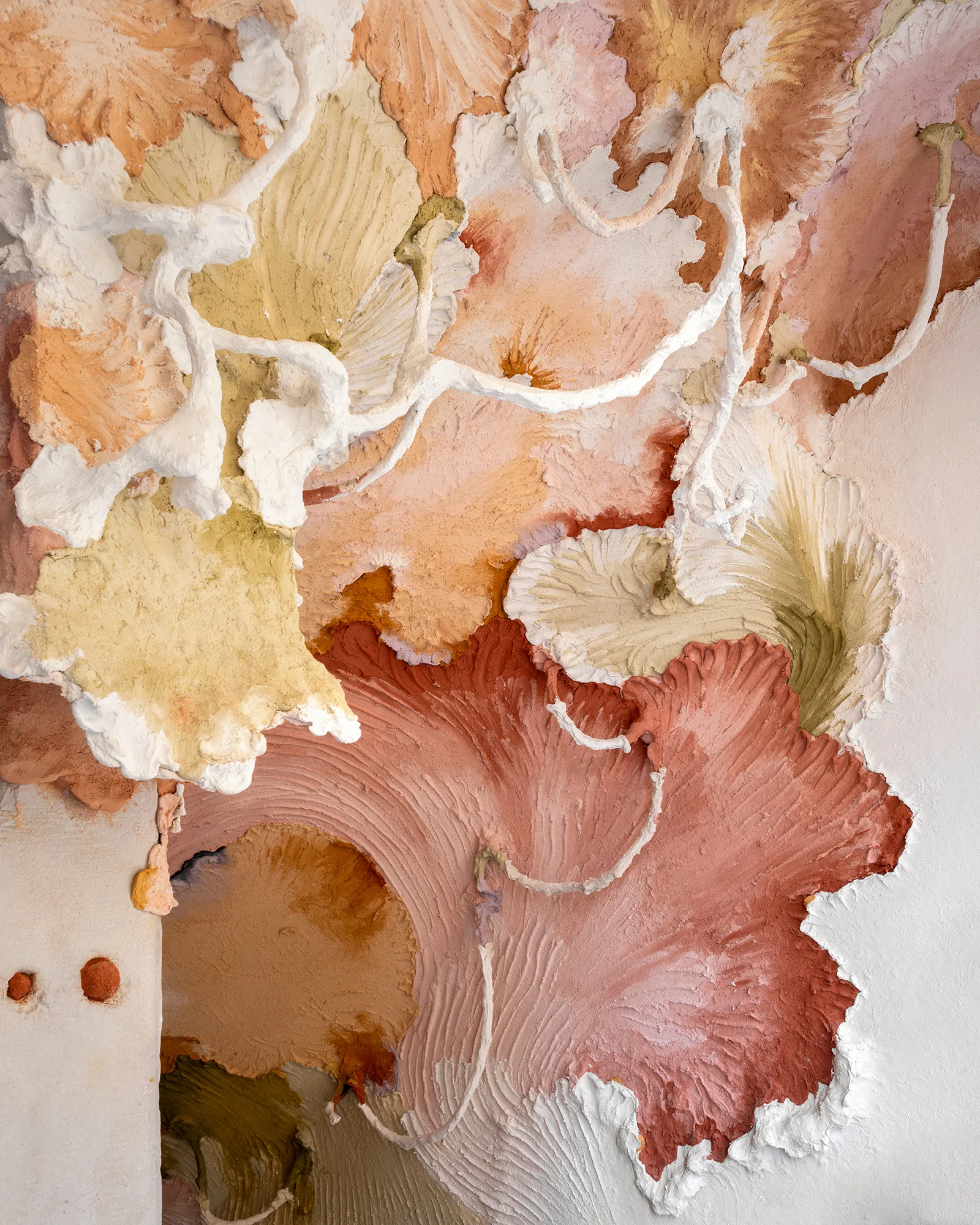
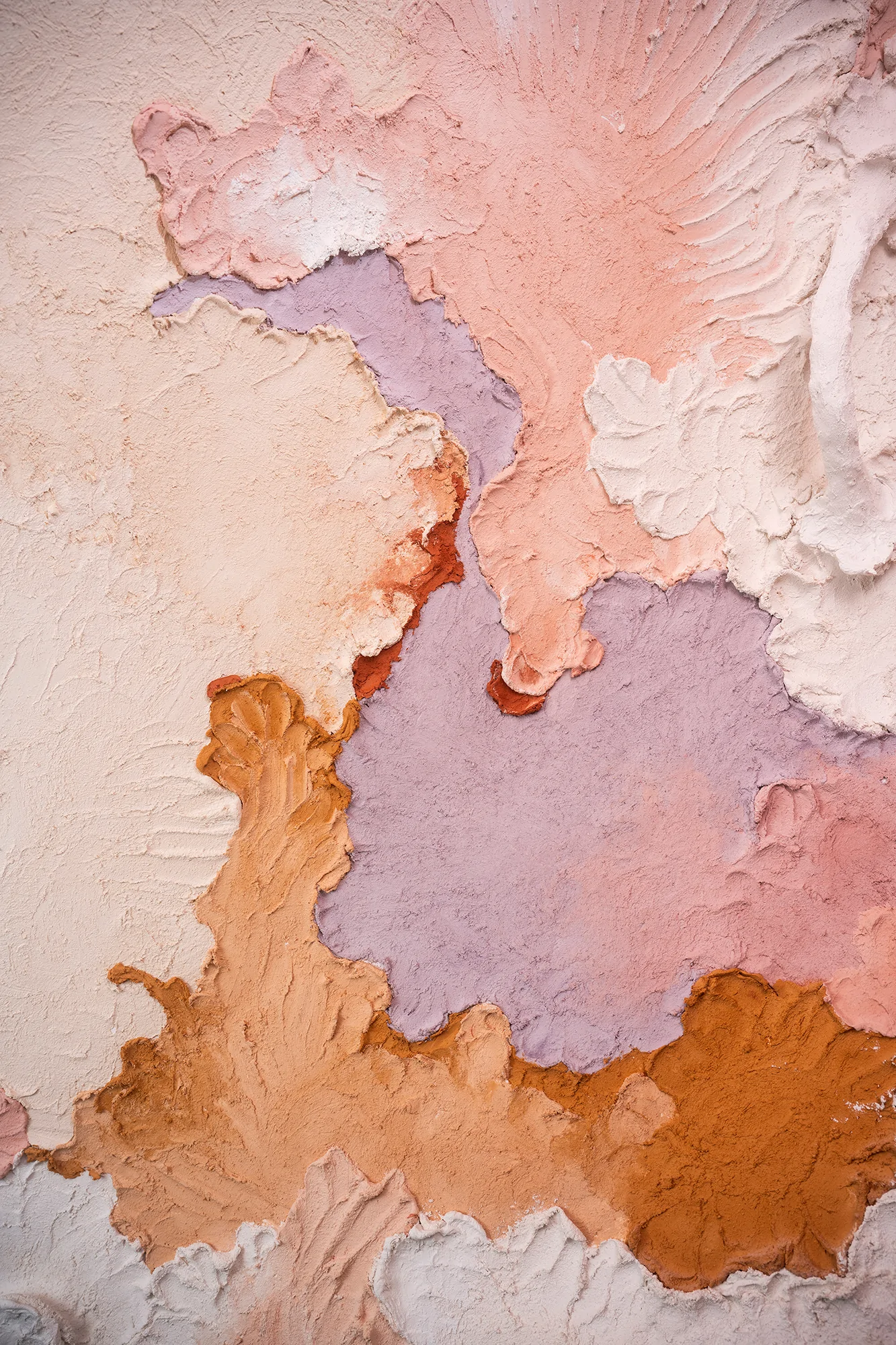
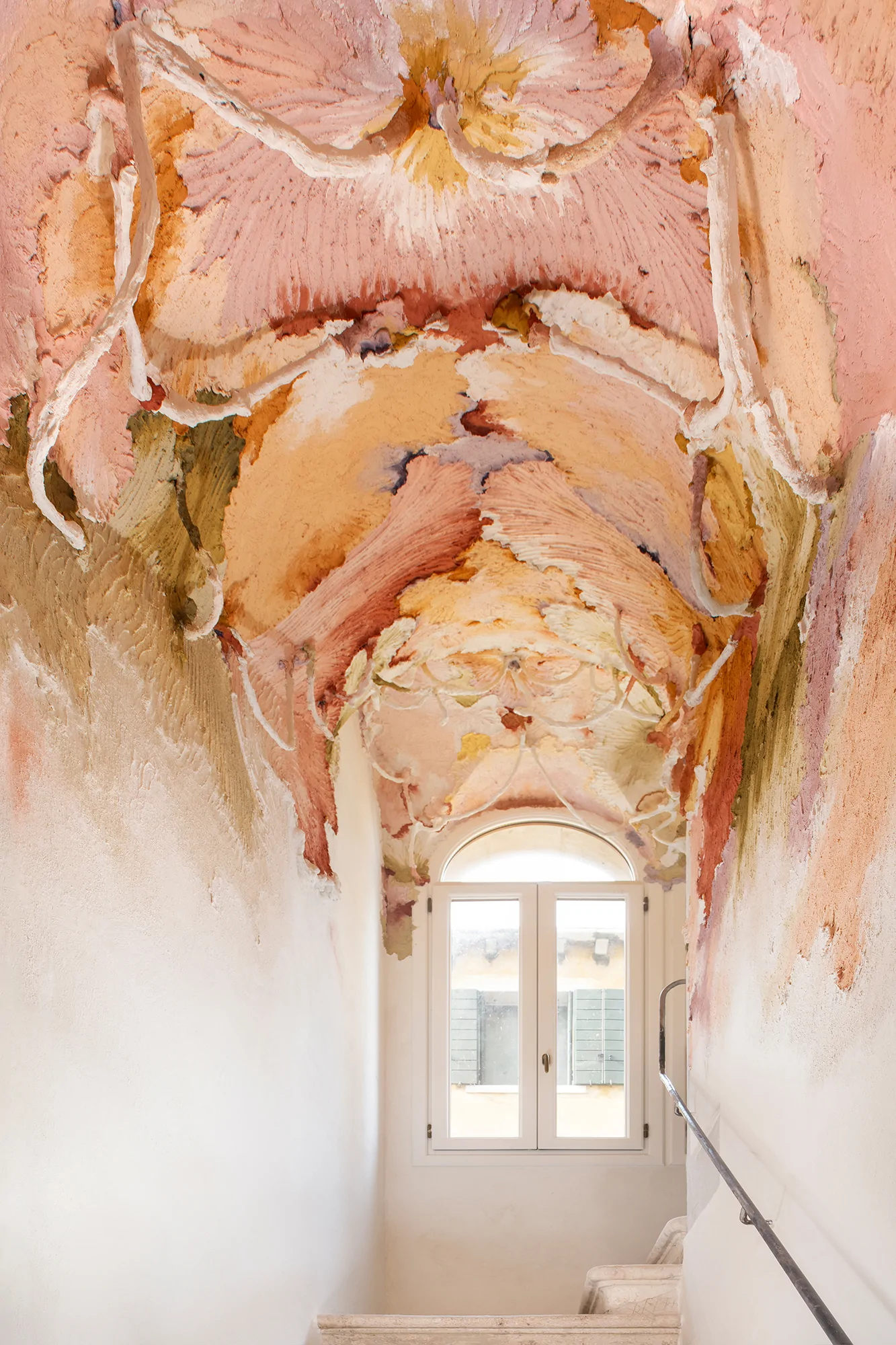
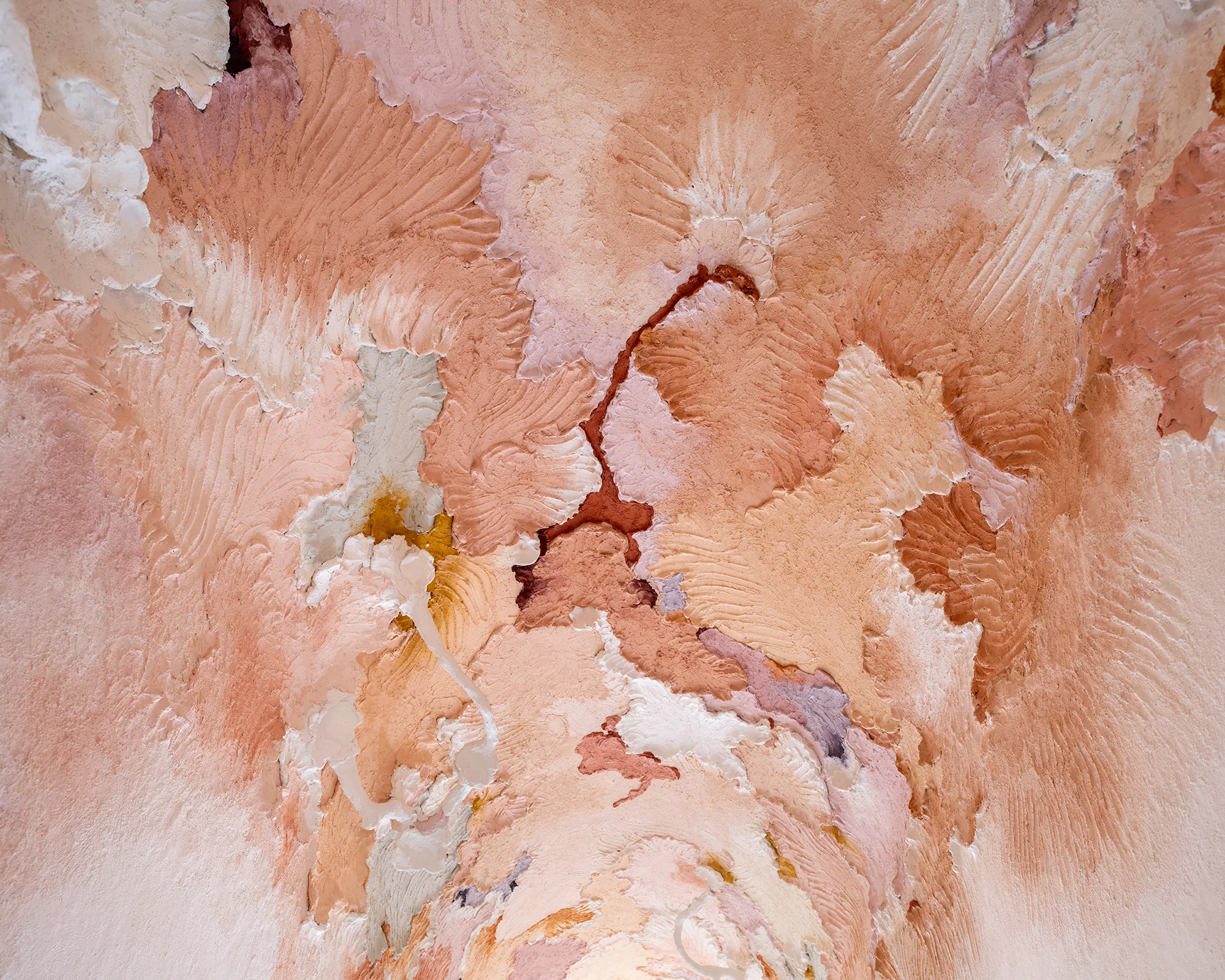
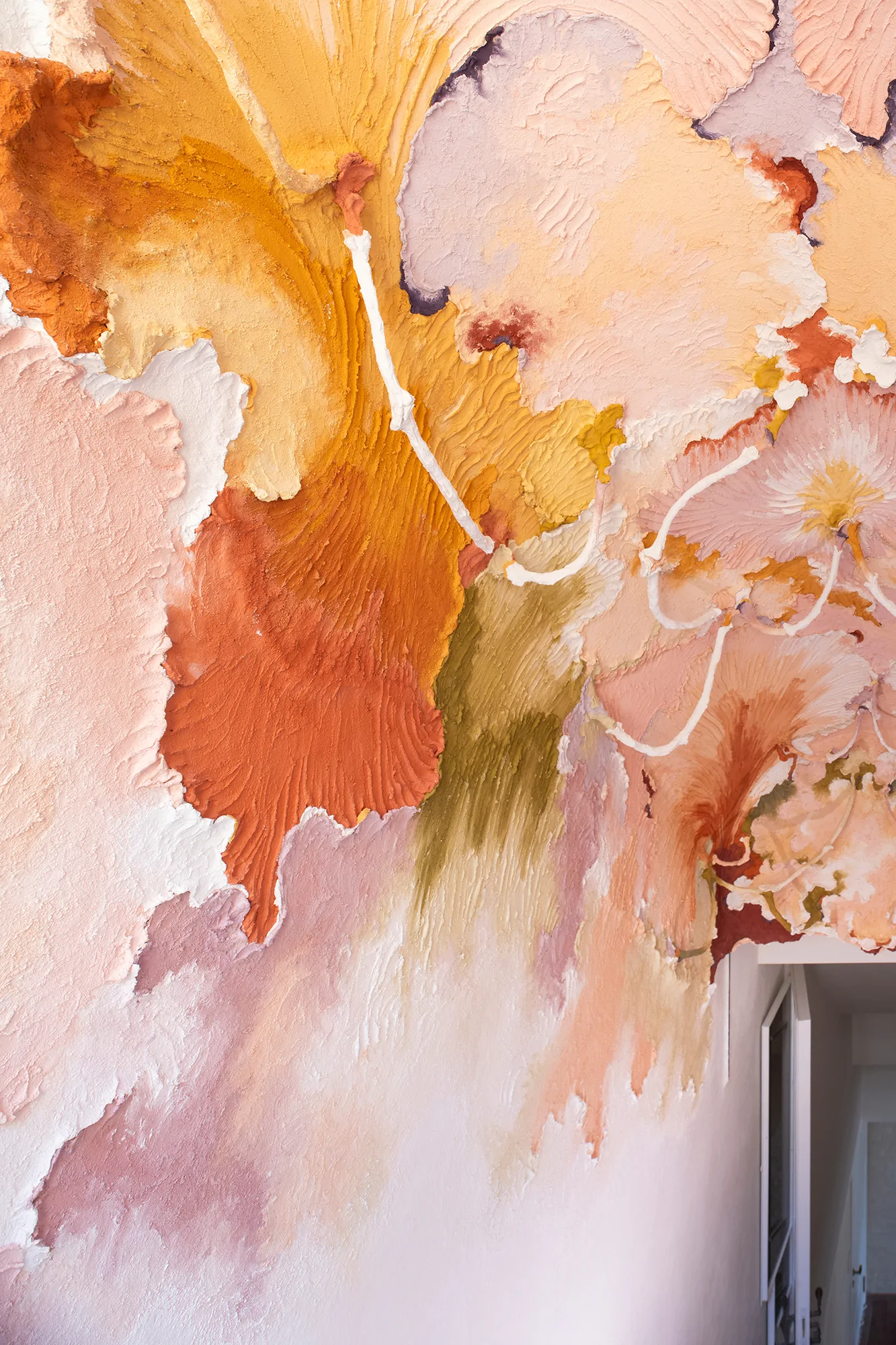
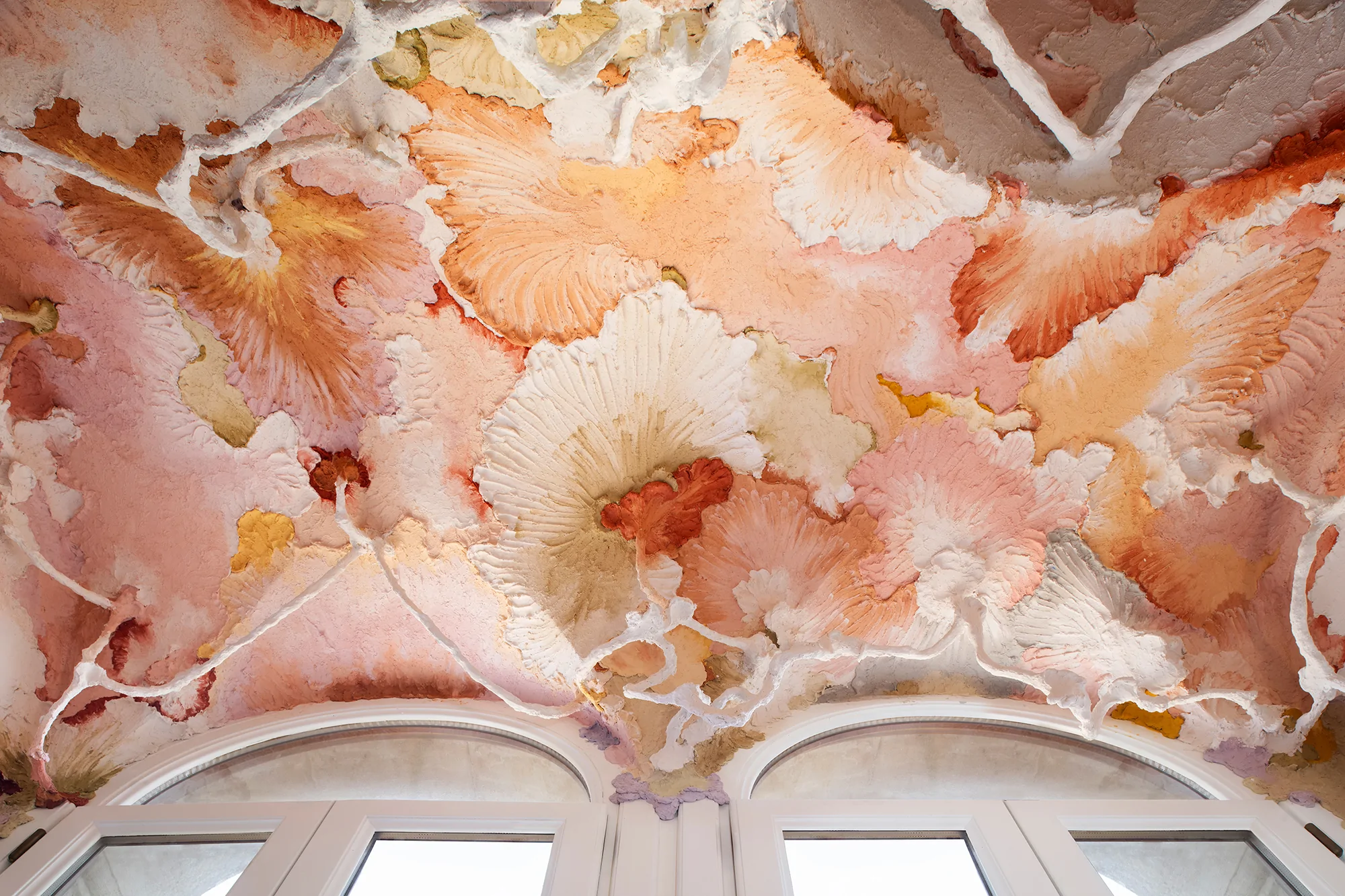
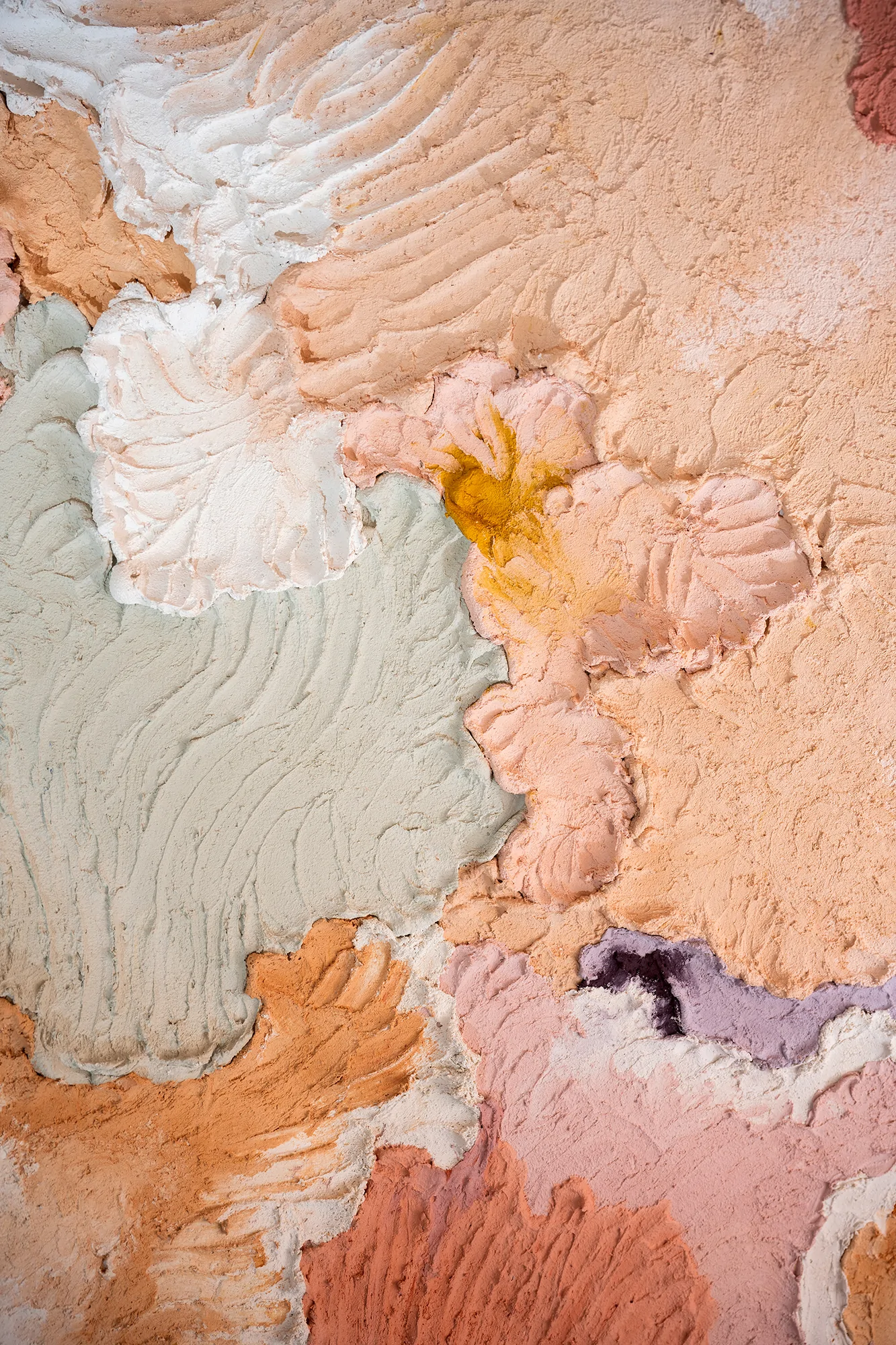
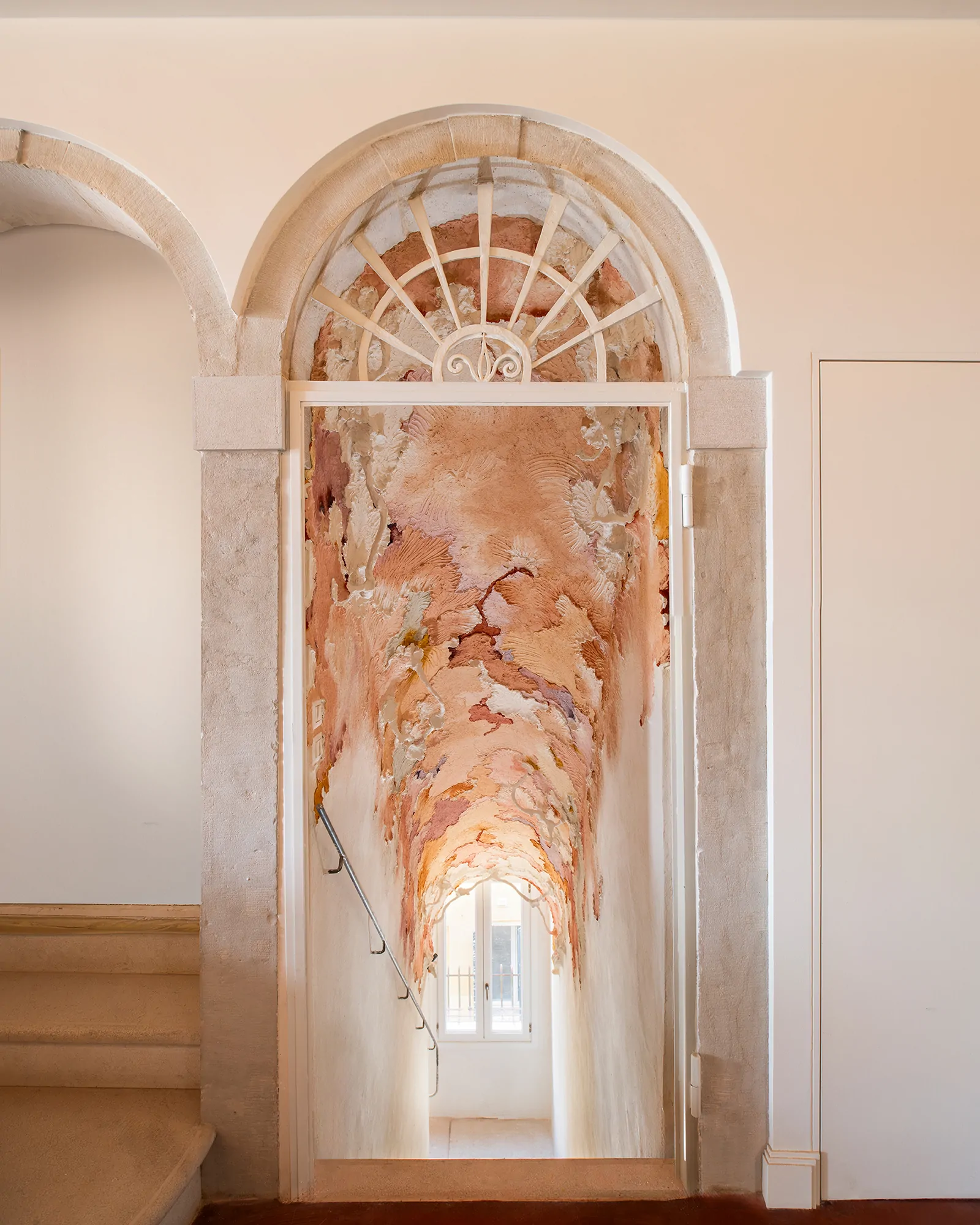
Cremisaria is a site-specific work conceived for the main staircase of a historic palazzo in Dorsoduro, a few metres from Punta della Dogana in Venice. The painting, created from white concrete, lime, and pigment, was applied by hand, layer upon layer, working upward from the bottom. This gesture, as it ascends, gradually transforms until it becomes sculpture, with the same organic quality as a calcareous concretion.
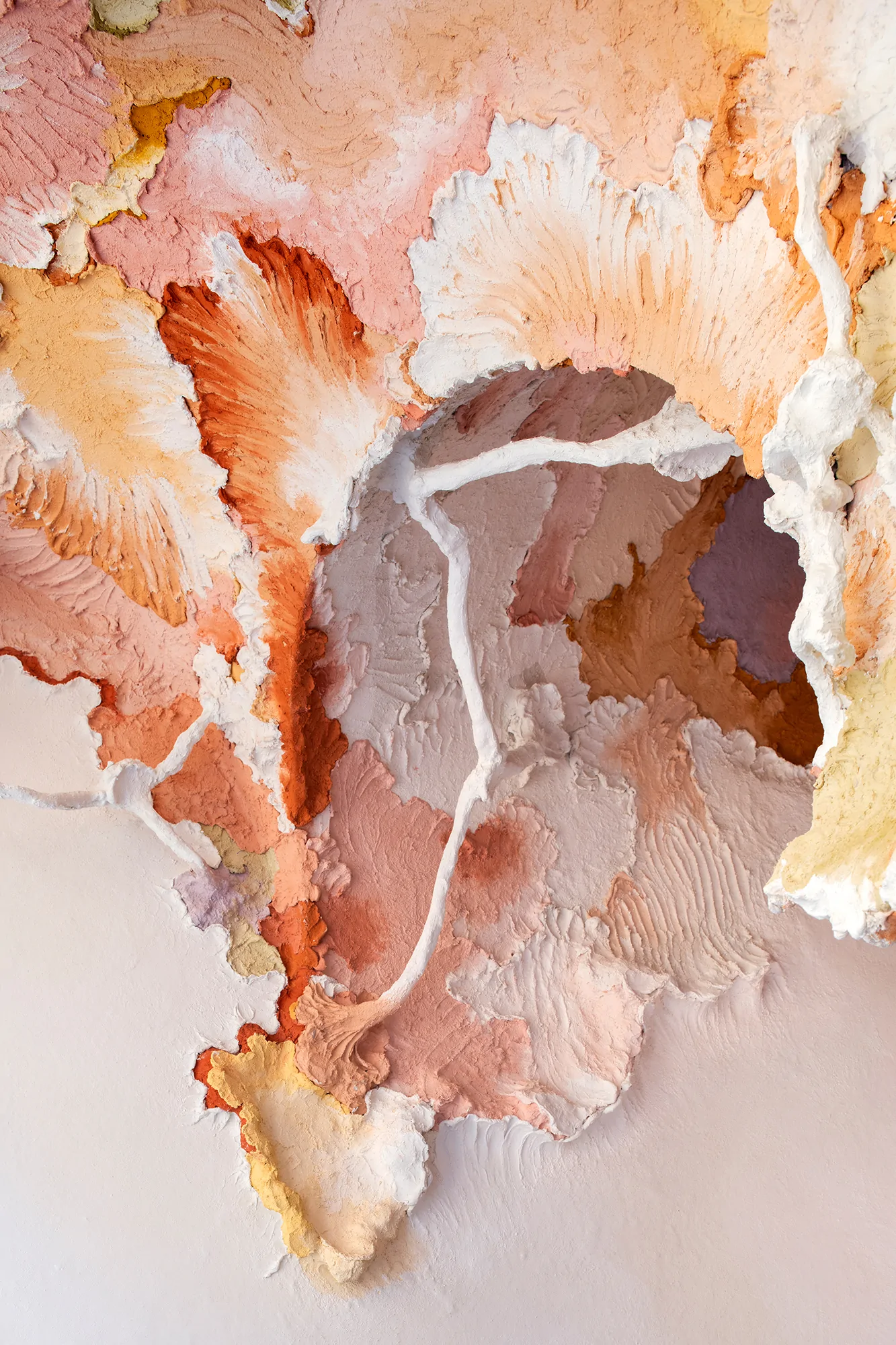
The painting reaches its most distinctive form at the apex of the vault, where it expands into branching sculptural forms and shifts from the whiteness of lime into shades of red. Gradually, orange, violet, pink, and finally green begin to emerge. The crimson red, tinged with burnt umber pigment, softens as it mixes with concrete and lime, as if the pure colour had been invaded by mist.
I conceived Cremisaria as a chromatic map that, as it is traversed, reveals the transformations of matter: colour, once born from an animal organism, returns to the vegetal realm.